
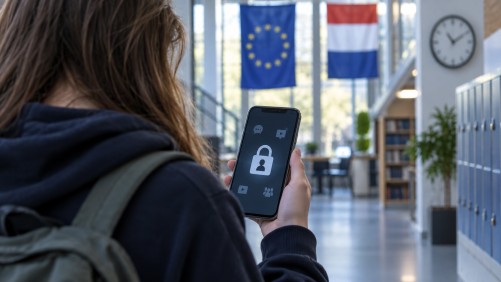
Amid growing concerns over children’s online safety, the Dutch government is advocating for a unified European minimum age for social media usage, potentially setting a new standard across the European Union. If implemented, platforms could be required to restrict access to users under 15, aligning digital safety protocols with those already in place for physical environments.
This initiative is part of a joint effort by the Netherlands and Spain, which have submitted proposals to the European Commission for both a standardized minimum age and privacy-centric age verification measures. Digital Economy Minister Willemijn Aerdts emphasized the necessity of extending the protection children enjoy offline to the online sphere.
The European Commission is currently evaluating these proposals as part of its broader discussions on digital policy, focusing on safeguarding children from social media risks. This move comes as individual countries within and outside the EU take unilateral steps to address the issue. For instance, Australia has already banned users under 16 from major social media platforms, while France has implemented a restriction for those under 15, and the UK plans to enforce similar measures for under-16s by 2027.
However, the push for standardized age restrictions raises questions about the effectiveness and security of age verification systems. A recent attempt by the European Commission to introduce an age-checking app faced criticism when a security researcher quickly found a way to bypass its protective measures, prompting a swift update from the commission.
As discussions continue, privacy advocates express concerns about how these systems might infringe on personal privacy or inadvertently exclude legitimate users. The success of any EU-wide policy will likely depend on balancing robust security with the protection of individual privacy rights.
