
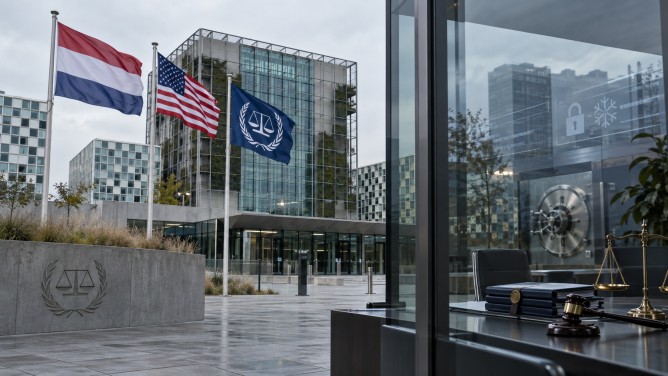
The potential for new U.S. sanctions against the International Criminal Court (ICC) could significantly impact its operations, prompting the Netherlands to prepare contingency plans to support the tribunal’s essential functions. Dutch officials are exploring strategies to ensure continued payment of staff, protection of witnesses, and maintenance of detention facilities if sanctions disrupt the ICC’s access to financial and other critical services.
The Trump administration has already targeted several ICC officials with sanctions, including judges and senior legal personnel, in response to the court’s investigations involving U.S. and Israeli officials. Washington accuses the ICC of overstepping its jurisdiction, a stance that has intensified tensions between the U.S. and the international tribunal.
These proposed measures could extend sanctions from individual officials to the ICC as a whole, potentially restricting the court’s interactions with U.S. companies and services. This would likely affect its banking, insurance, and technology operations, prompting the ICC to explore alternatives to U.S.-based service providers and review its financial and technological arrangements.
As the ICC’s host country, the Netherlands has been proactive in discussing ways to counteract the potential impact of broader sanctions. The court, headquartered in The Hague since its establishment in 2002, plays a crucial role in prosecuting cases of genocide, crimes against humanity, war crimes, and aggression when national systems fail to act.
This evolving situation underscores the complex relationship between the ICC and the U.S., highlighting ongoing debates over international jurisdiction and national sovereignty. As the Netherlands steps up its efforts to safeguard the court’s operations, the international community will be watching closely to see how these tensions unfold and what repercussions might follow.
