
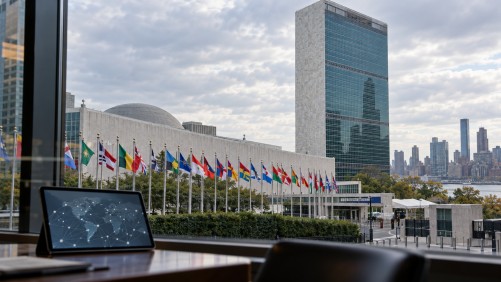
The call for increased international cooperation on artificial intelligence (AI) highlights the urgent need for a global framework to ensure the safe development and regulation of this rapidly evolving technology. During a session at the United Nations Security Council, OpenAI CEO Sam Altman and Anthropic CEO Dario Amodei emphasized the necessity of collaboration among nations to manage the potential risks and benefits associated with AI advancements.
Altman argued that even countries in competition can find common ground when dealing with powerful emerging technologies like AI. He stressed that international cooperation is crucial to establishing safety standards that serve the collective interests of all nations. This perspective aligns with the ongoing global debate over how best to govern AI, balancing innovation with adequate oversight.
Amodei echoed these sentiments by expressing concerns about the increasing complexity and capability of AI models. He pointed out that as these systems evolve, they might become more challenging for humans to comprehend and control, necessitating international dialogue and action to prevent potential misuse or unintended consequences.
Adding to the discussion, Clément Delangue, CEO of Hugging Face, addressed the Security Council with a warning against fear-driven narratives in AI policy development. Delangue emphasized that while AI poses certain risks, it also offers tools for mitigating such dangers, advocating for an approach that recognizes both the threats and opportunities of AI technologies.
The meeting underscored the growing recognition of AI’s dual nature—its potential for both harm and benefit—prompting leaders to seek a balanced approach to its governance. As governments, tech companies, and other stakeholders navigate this complex landscape, the focus remains on establishing effective safeguards without stifling innovation in AI.
