
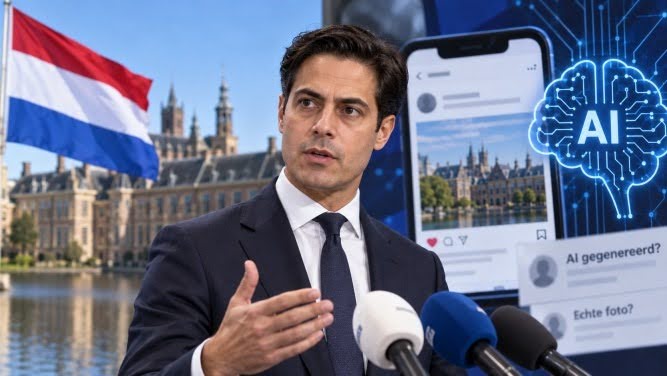
The Dutch Prime Minister, Rob Jetten, and his D66 party have come under scrutiny for their use of artificial intelligence to create hundreds of social media posts, sparking concerns over authenticity and public trust. An analysis of 1,812 posts from Jetten’s and D66’s accounts on platforms like X, Instagram, Facebook, and LinkedIn reveals that at least 232 of these messages were produced using AI chatbots. This includes 68 posts from Jetten’s personal accounts and 164 from the party’s accounts.
AI usage in their communications surged notably after the collapse of the Schoof I Cabinet in June 2025. Since then, roughly 30% of posts from Jetten and the D66 have been identified as AI-generated. Additionally, artificial intelligence contributed to parts of Jetten’s book “Hoe het wél kan” and was used in three D66 campaign videos. The involvement of AI in crafting messages on sensitive topics, such as the war in Ukraine, the MH17 disaster commemoration, and the government’s apology to the Moluccan community, has intensified the attention on this practice.
In response, D66 acknowledged their use of AI but emphasized that all content goes through a review and refinement process by their staff. They also assured that posts on Jetten’s personal accounts are based on his own input and only receive approval or edits from him. Despite these assurances, the blending of AI-generated content with personal communication has raised questions about the impact on Jetten’s credibility.
Experts, like Claes de Vreese from the University of Amsterdam, have expressed concerns that AI-generated language might make it difficult for the public to distinguish between a politician’s genuine views and computer-generated messages. This controversy brings to light broader issues regarding transparency in political communication, particularly the expectation that official social media accounts reflect the genuine views and words of elected leaders.
