
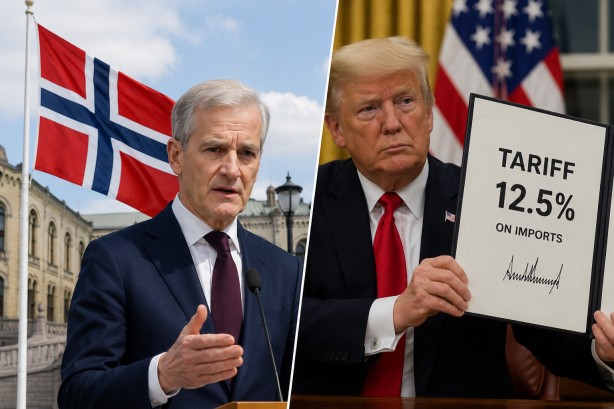
The Norwegian government has voiced strong disapproval of the recent decision by U.S. President Donald Trump to implement a 12.5% tariff on the majority of Norwegian imports, labeling the move as inequitable and unwarranted. Effective immediately, this tariff impacts key Norwegian exports, including seafood, furniture, and industrial goods. Norway’s Foreign Minister, Espen Barth Eide, has challenged the U.S. assertion that Norway has not adequately prevented the importation of goods produced with forced labor. Eide emphasized that Norwegian legislation strictly bans products made through forced or child labor and noted that the government has officially communicated its objections to U.S. authorities.
The Norwegian government has also raised concerns about being subjected to a higher tariff rate than the European Union and the United Kingdom, which are both facing a 10% tariff. Despite this, Norway has decided against imposing retaliatory tariffs, arguing that such measures would only result in higher costs for Norwegian consumers. The government maintains that adhering to the principles of free trade is paramount, even in the face of these new economic challenges.
Although Norwegian exports to the U.S. constitute a relatively small portion of its overall trade, there are apprehensions among officials and analysts that the tariffs could negatively impact seafood exports, a significant sector for Norway. The tariffs are also seen as a potential threat to the broader principles of free trade, which Norway staunchly supports.
As the situation develops, the Norwegian government continues to engage diplomatically with the U.S., seeking a resolution that aligns with international trade norms. The decision to refrain from immediate countermeasures underscores Norway’s commitment to maintaining stable trade relations, even while objecting to what it views as unfair trade practices.
Norway’s response to the tariff situation highlights the complexities of international trade relationships and the challenges smaller economies face in negotiating terms with larger partners like the United States. As discussions progress, Norway remains firm in its stance against the tariffs and continues to advocate for fair trade practices on the global stage.
