
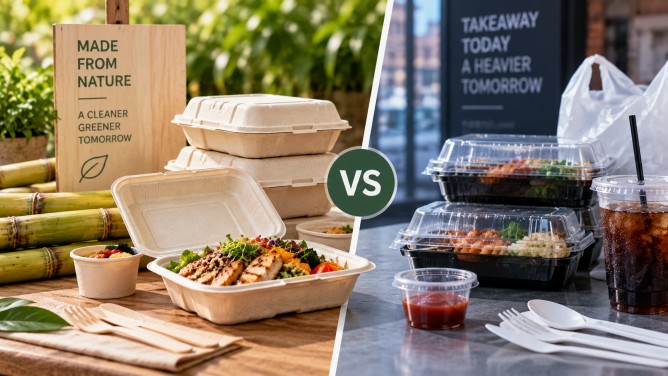
In the realm of takeaway food packaging, bagasse and plastic containers each offer distinct advantages depending on various factors such as menu type, holding duration, sealing requirements, regional regulations, and packaging costs. Bagasse, known for its molded-fiber structure, is particularly effective for hot entrees, rice meals, pasta dishes, catering trays, and compartment meals. It offers rigidity and a clean presentation, with barrier options available to enhance its resistance to grease, moisture, and temperature changes. For those with compostability goals, bagasse is a viable option, though the entire system—including coatings and lids—must be assessed alongside the availability of composting infrastructure.
On the other hand, plastic containers remain practical for some applications, especially for chilled foods, items needing clear visibility, and high-moisture environments. They also suit price-sensitive programs when local waste management supports the chosen polymer. Buyers are encouraged to compare specific plastic SKUs with bagasse alternatives to determine the most suitable option. A phased transition rather than an immediate switch from plastic to bagasse may be more feasible for many businesses.
It is crucial to match the container structure to the type of food being served. Hot or sauce-heavy meals should be tested for deformation and leakage, while fried foods require assessments for condensation and texture retention. For soups and liquid-heavy dishes, the complete container-and-lid system must be evaluated. Delivery programs should conduct loaded-stack and transport tests, and items intended for microwave or reheating should be validated for temperature and heating methods. Differences also exist between standard, coated, and laminated bagasse products, with additional barriers offering improved resistance to oil and moisture.
While bagasse containers might be more expensive than traditional plastic options, the overall packaging cost is determined by multiple factors, including storage, freight efficiency, and operational impacts. Pilot programs can help businesses compare costs by testing bagasse solutions with high-volume menu items before broader implementation. Grizzlies, a company with extensive OEM/ODM manufacturing capabilities, supports these transitions by offering customized molded-fiber packaging solutions. They operate 11 production bases and over 280 automated machines, producing up to 200 containers monthly.
Ultimately, the decision between bagasse and plastic should be driven by the specific food application and market needs. Bagasse is beneficial when its structural rigidity and compostability are advantageous, whereas plastic may be preferable when transparency, specialized sealing, or low cost are priorities. Whichever material is chosen, real-world testing is essential before embarking on a large-scale packaging transition.
Legal Disclaimer:
The information contained in this article has been provided by independent third-party contributors, clients, or content partners. We do not independently verify the accuracy, completeness, legality, ownership, licensing, or reliability of submitted content, including text, images, videos, trademarks, or other media materials. The submitting party is solely responsible for ensuring that all content, including images and media assets, complies with applicable copyright, trademark, licensing, and intellectual property laws. We disclaim liability for any unauthorized use of copyrighted or proprietary materials by third parties. If you believe that any content published on this platform infringes your intellectual property rights, kindly contact the author above for prompt review and resolution.
