
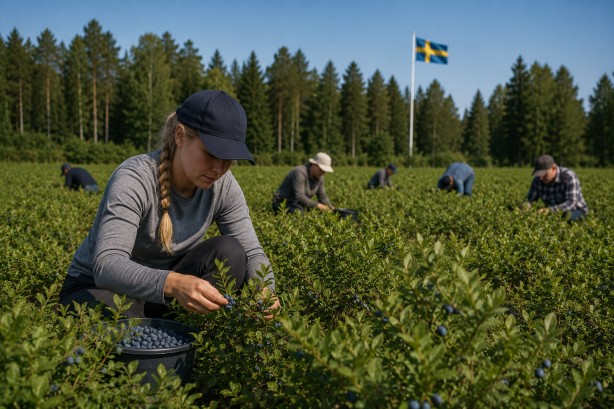
Sweden has significantly ramped up its approval for seasonal berry pickers this year, granting permits to 950 workers—a stark contrast to the mere 89 permits issued in the previous year. The majority of these workers are coming from Thailand, indicating a strong demand for foreign labor in Sweden’s berry industry. This increase comes after Swedish employers made notable improvements in meeting labor standards, addressing prior concerns about working conditions that had previously led to a substantial number of permit rejections.
According to Swedish authorities, several employers have shown their capability to provide fair working conditions, which has allowed a higher number of applications to be approved. This development demonstrates a commitment to ensuring that foreign workers are treated equitably, aligning with the country’s labor standards. The shift in policy reflects Sweden’s efforts to balance the need for seasonal labor with the imperative to uphold ethical employment practices.
A significant regulatory change has also been implemented in the process of admitting these workers. Under the updated government regulations, berry pickers are now brought in under the European Union’s seasonal workers directive, rather than through standard work permits. This change is part of a broader strategy to enhance oversight and improve the protection of workers’ rights.
Furthermore, the new rules stipulate that these workers must be directly employed by Swedish companies, rather than through Thai staffing agencies. This adjustment is aimed at reducing potential exploitation and ensuring better compliance with Swedish labor laws. By directly involving Swedish companies, the government seeks to maintain closer scrutiny over employment conditions, thereby safeguarding the welfare of the workers.
The increase in permits is expected to help Sweden’s berry industry meet its seasonal labor demands more effectively. At the same time, the regulatory changes are designed to ensure that foreign workers benefit from improved employment standards. This development marks a positive step forward in Sweden’s approach to managing seasonal labor, balancing economic needs with social responsibility.
